RISK: Global Domination
- 4.3
- Rating
- 10.00M
- Installs
- Free
- Price
 Analysis by App-foxy
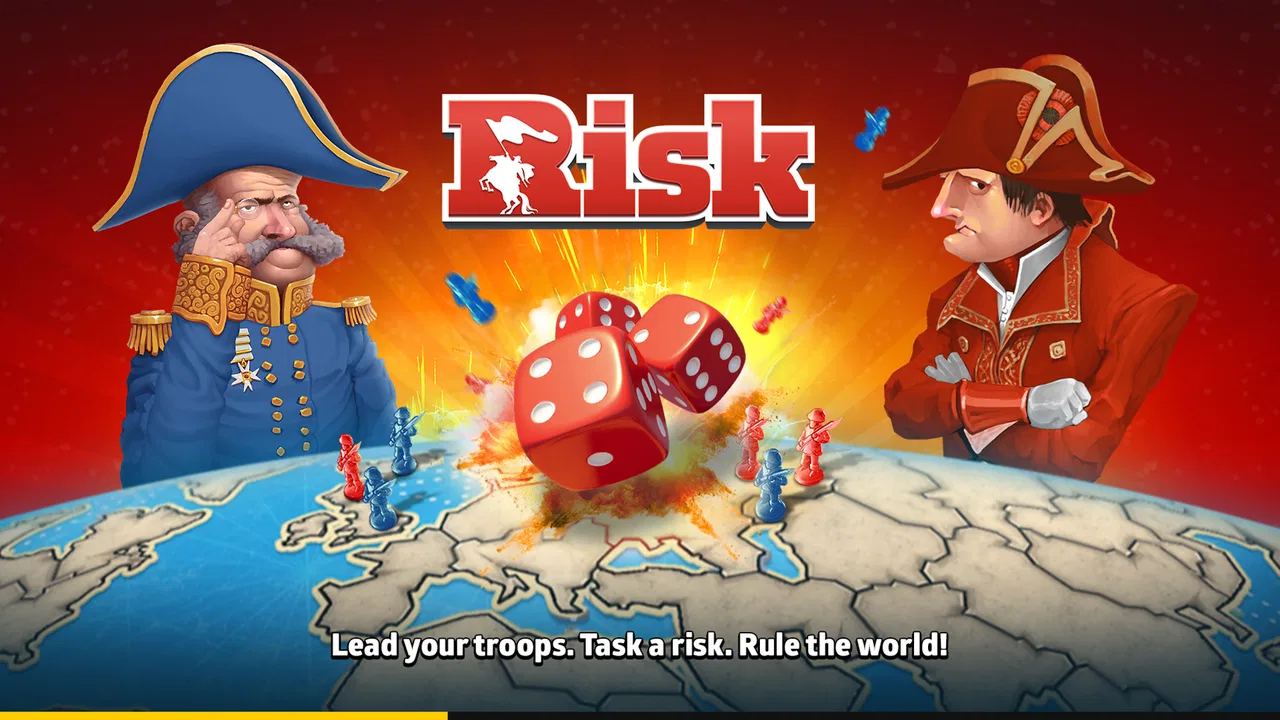
RISK: Global Domination is the kind of board game I open when I want a match that feels more meaningful than a quick puzzle but does not require learning a completely unfamiliar rulebook. It brings the classic world-conquest idea to Android and iOS, with SMG Studio handling the digital version. I found its appeal in the tension between a strong opening plan and the uncomfortable moment when another player quietly dismantles it.
It is free to download, rated Everyone 10+, and sits in the board-game category. The app has reached over 10 million installs, with a 4.3 average from around 356 thousand ratings and roughly 45 thousand written reviews. Those figures suggest a large, active audience, but they do not remove the central question: is this particular version a good fit for the way you like to play?
My short answer is yes if you enjoy turn-based strategy, negotiation, risk management, and matches that can change direction several times. I would be more cautious if you want instant rounds, a purely relaxing experience, or a game where losing never feels personal. This is still RISK, and that means patience, uncertainty, and sometimes watching a promising position collapse because one attack went too far.
You May Also Like

 Pandora - Music & Podcasts
Pandora’s Music Is Easy to Start, but Harder to Recover
Pandora’s strength is its low-effort path from a seed to a station. Its weak spot is how much confidence it asks you to place in connection, setup, and quiet recovery.

 8 Ball Pool
 Is Built on Rivalries, Rematches, and Routine
A close look at the rivalries, rematches, shared routines, and unanswered safety questions that turn a quick pool match into a persistent mobile community.

 Samsung Music
’s Quiet Strength Is Playing What You Already Own
Its reach comes less from spectacle than from dependable access to a personal library. That simplicity is both the app’s strongest retention engine and its ceiling.

 AccuWeather: Weather Radar
AccuWeather Review: A Quick, Clear Forecast for Everyday Decisions
For everyday plans, the best forecast is the one you can understand quickly. AccuWeather makes rain timing, radar, and local conditions easy to act on, with a few trade-offs.

 Hill Climb Racing
Why Hill Climb Racing Still Turns Crashes Into One More Run
A tiny car, a bumpy hill and one more upgrade: Hill Climb Racing keeps resurfacing because its simple chaos makes every near-miss feel personal.

 AliExpress - Shopping App
AliExpress Makes Global Shopping Feel Personal, but Shoppers Bear the Risk
AliExpress turns a global marketplace into a pocket-sized discovery engine. Its reach is useful, its shopping loop compelling, and its trade-offs easy to miss.
More From Our News Desk
View All News


How the game feels from the first turn to the last
I find the game’s appeal becomes clearest when I follow a match as a sequence of choices rather than a race to claim territory: each move changes what feels safe, worthwhile, or suddenly urgent. The most useful habit is to pause after a successful attack and check what it has left exposed before committing again. From there, the real question is how those decisions keep producing momentum—and when the payoff makes another match tempting.
A familiar board with more room for experimentation
The basic pleasure is easy to understand. You place armies, attack neighboring territories, defend important positions, and try to build enough control to reach the objective. The digital format makes the board easier to inspect than a physical set spread across a table. I can focus on borders, vulnerable areas, and likely attacks without moving pieces by hand or asking someone to recount units.
That convenience changes the rhythm. A physical RISK session often depends on finding a table, gathering players, and keeping the board undisturbed. Here, the game is ready whenever I have a suitable block of time. That makes it useful for a planned session with friends, but also for a strategic break when I want something deeper than a few minutes of tapping.
The important detail is that the game does not become simple just because the controls are digital. The interface may make actions clearer, but the decisions remain demanding. I have to judge whether an attack improves my position or merely spends troops that should have protected a border. A territory can look attractive while actually creating another exposed front, and that kind of trap is where the board earns its reputation.
Speed expectations: quick actions, slower decisions
In my experience, the game feels fast at the level of individual commands. Selecting a territory, choosing a target, and confirming an action is much less cumbersome than handling physical pieces. That does not mean every match feels quick. The real time cost comes from thinking, waiting for other players, and dealing with the consequences of an uncertain attack.
This distinction matters when deciding whether to play during a short break. If I only have a few spare minutes, I would not start a serious match expecting a clean conclusion. The app is better suited to a session where I can leave room for the board to develop. Even when turns themselves are brief, a strategic game can become long because every player is evaluating the same shifting map.
For a faster experience, I recommend approaching each turn with a simple priority order: protect the border that can actually be attacked, identify the cheapest useful objective, and stop before an extra attack turns a good turn into a reckless one. This is not just general advice. In this game, the temptation to continue after a successful opening is one of the easiest ways to lose momentum.
The pace also depends on the people in the match. Against decisive players, the board moves along and the tension comes from reading their intentions. Against cautious players, the same map can become a slow contest of positioning. That variety is part of the appeal, but it means the app is not a reliable choice when I need a predictable, tightly timed game.
Where heavy use becomes noticeable
The most demanding moments are not necessarily the first turns. Early play usually involves spreading out, testing borders, and deciding which areas deserve attention. Heavy use arrives when several players have developed strong positions and every action affects more than one frontier. At that point, I spend more time studying the board, comparing possible attacks, and reconsidering plans after each change.
Long sessions can also feel mentally heavier than the simple presentation suggests. The board is visually understandable, but a crowded position asks me to track troop concentrations, defensive gaps, and the likely response to an attack. I would not describe this as a game that consumes attention only when I am actively pressing buttons. Even during another player’s turn, I am usually planning what I will do next.
That makes it a good fit for a tablet or a larger phone display, especially when the map contains many competing fronts. On a smaller screen, the game is still more convenient than a physical board, but I may need to pay closer attention when selecting territories or reviewing a complicated position. I prefer not to rush those moments, because one mistaken tap or misunderstood border can affect the entire turn.
Resource demands are best judged realistically. RISK: Global Domination is a board game rather than a visually intense action title, so I do not approach it expecting the same kind of device load as a modern three-dimensional game. Still, extended play can involve repeated screen activity and a long period with the display awake. On an older phone, I would close unnecessary background apps and avoid beginning a long match with very little battery remaining.
The practical trade-off is simple: the game is strategically heavy even when it is not graphically demanding. If your device handles ordinary modern board games comfortably, the main limitation is likely to be your available attention and screen space rather than the board itself. That is a better reason to choose a larger display than chasing visual effects.
Reliability and recovering from an interrupted match
A strategy game is only enjoyable when I can trust that a session will not be wasted. My approach is to treat every match as something that deserves a stable connection and uninterrupted time, particularly when other people are involved. A single pause is less annoying in a solo setting than when several players are waiting for a turn to continue.
I also avoid switching between too many demanding apps during a match. This is sensible for any mobile game, but it matters more here because the cost of losing concentration is high. If I return after a distraction, I may remember my broad plan but miss the tactical detail that made one border more urgent than another.
Recovery is another reason not to play casually while moving between tasks. If I need to leave suddenly, I would rather do so at a natural stopping point than in the middle of a decision. The game’s turn-based nature is more forgiving than a real-time title, but that does not make every interruption harmless. A match can continue without my full attention only if I am comfortable accepting that my position may change while I am away.
For dependable play, I recommend using a stable network, keeping the app updated, and checking that the phone has enough free battery for the session. The current version is 3.23.0, and the game supports Android 7.0 or later. Those requirements make it accessible to a broad range of devices, although compatibility alone does not guarantee that every older phone will feel equally comfortable during a long match.
Device constraints and choosing the right screen
The Android minimum of 7.0 is helpful for people using older hardware, but I would separate operating-system support from overall comfort. A phone may run the game while still offering a cramped view or less convenient touch interaction. For me, screen size affects decision quality more than raw visual quality. When I can see several borders at once, I make fewer hurried choices.
On a phone, the game works best when I am seated and focused rather than walking or multitasking. A tablet offers a more relaxed board-reading experience, especially for players who enjoy examining the whole position before committing to an attack. The larger display does not make the strategy easier, but it reduces the effort needed to understand the map.
I would also consider who owns the device. If children use the same phone, the Everyone 10+ rating is worth noticing before installing it. That rating makes it suitable for a broad audience, but parents should still decide whether the competitive conquest theme and in-app purchase options fit their household rules.
The game is free to start, which lowers the barrier to trying it. However, in-app purchases range from $1.69 to $119.99 per item. I would make a personal spending rule before exploring optional purchases, particularly if the game becomes a regular habit. The free entry is attractive, but a player should not confuse “free to download” with “impossible to spend money inside.”
Three habits that improve the experience
My first useful habit is to value a defensible position over a dramatic expansion. New players often see an unoccupied or weakly held area and assume it is automatically worth taking. I try to ask what border that move creates and how many troops I will need to keep it. A smaller gain that simplifies defense can be better than a larger gain that leaves several exposed edges.
Second, I avoid treating every successful attack as an invitation to continue. The first victory can create confidence, but it can also drain the force that was protecting my original territory. I prefer to stop when the next move offers only a small improvement and a large chance of opening a counterattack. This is one of the clearest differences between playing for excitement and playing for a result.
Third, I watch for changes in the balance of attention. If two players are fighting intensely, a third player may gain time to strengthen a separate position. I do not need to interfere in every conflict, but I do need to notice when the board is being reshaped without me. Sometimes the best turn is not the one with the biggest attack; it is the one that prepares a safer response to what everyone else is doing.
These habits also explain why the game can be more interesting with friends than with people who all follow the same obvious plan. Human opponents create uncertainty around alliances, threats, and timing. At the same time, that social layer can make losses feel sharper. If you prefer completely predictable competition, a traditional puzzle or a fixed-rule strategy challenge may suit you better.
Who should play it, and who should skip it
I recommend it to players who enjoy board games with long-term consequences. It is particularly suitable for someone who likes comparing risks, reading opponents, and improving through repeated matches. You do not need to be a serious tabletop expert to begin, because the central idea is familiar, but you do need to accept that early mistakes may remain visible for a long time.
It is also a good choice for a group of friends looking for a shared strategy game that does not depend on fast reflexes. The digital board removes much of the setup work, so the group can spend more time making decisions. For a family, the age rating makes it worth considering, provided everyone is comfortable with the competitive theme and the purchase controls are handled sensibly.
I would skip it if you want a match that always ends quickly, if you dislike losing after a long build-up, or if you prefer games where every turn has a clearly correct answer. RISK is built around incomplete information and uncertain outcomes. Even a strong plan can fail, and a weak-looking player can become dangerous after one well-timed change in position.
I would also choose another board-game app when I want a calmer solo activity with a definite endpoint. A compact puzzle or a short card game is better for a commute, a queue, or a break with a strict time limit. This game is more rewarding when I can give it room to breathe.
How it compares with physical RISK and other mobile board games
Compared with the physical version, the app wins on convenience. There is no need to store pieces, count armies manually, or protect a half-finished board from being disturbed. The screen also makes it easier to start a match without coordinating a table first. Those advantages are substantial for people who enjoy the rules but rarely have the practical conditions for a physical session.
The physical board still has a social quality the phone cannot fully replace. Sitting around the same table makes negotiations, reactions, and small moments of tension more immediate. If your main reason for playing is the shared room rather than the strategy itself, a physical set may remain the better option.
Against lighter mobile board games, this version is less immediately relaxing and more demanding of commitment. A quick card game may provide a complete experience in a short sitting, while a world-conquest match asks me to remember earlier decisions and stay engaged with a developing map. Against complex strategy games, however, it is more approachable because its central objective is easy to grasp.
That middle position is its strength. It is deeper than a disposable time-filler without requiring the study burden of a large simulation. The trade-off is that the familiar rules can hide the amount of thought needed to play well. Someone may install it expecting a casual board game and discover that the real challenge is managing patience.
What the free version means in everyday use
The free price makes experimentation straightforward. I can install it, learn whether the pacing suits me, and decide later whether I want to spend anything. I would not make purchases simply because a match went badly; frustration is a poor guide to spending. If I ever choose an in-app item, I would treat it as an optional convenience rather than something required to justify downloading the game.
The purchase range deserves attention because the upper end is much larger than the entry price of the app. That does not automatically make the game unsuitable, but it does mean families and players who are prone to impulse buying should use the device’s purchase protections. The best way to enjoy the strategy is to keep financial decisions separate from the emotional swings of a close match.
For an everyday scenario, I can imagine starting a game after dinner with friends, playing a few turns while everyone is still settling in, and returning to it later when the group has time to focus. I would not choose it for a five-minute wait at a bus stop unless I was already in a match and happy to make only a small amount of progress. The game rewards continuity more than fragmented attention.
My performance verdict
RISK: Global Domination feels like a practical mobile home for a classic strategy board game. Its strongest performance is not about flashy presentation; it is about making a complicated physical setup available on demand and keeping the central decisions readable. On a suitable device, I expect the main challenge to be managing a long, attention-heavy match rather than handling demanding graphics.
The Android requirement of 7.0 or later keeps the door open to older phones, while the current 3.23.0 release gives users a clear version target. I would still favor a larger screen, a charged battery, and a stable connection for serious sessions. Those simple conditions make a noticeable difference to comfort and reduce the risk of an interrupted game ruining the evening.
My final recommendation is positive, with an important qualification: this is a strategy commitment disguised as a familiar board game. I would install it if I wanted thoughtful turns, shifting alliances, and the satisfaction of turning a vulnerable position into a winning one. I would leave it aside if I needed instant entertainment or disliked uncertainty.
After spending time with it, I see why RISK: Global Domination has attracted such a large audience. It preserves the recognizable conquest formula while removing much of the physical friction around playing. The free entry is inviting, the age rating is broad, and the developer is well identified as SMG Studio. Just approach it with realistic expectations: it is not a quick distraction, and its best moments arrive when I have enough time to think before I roll the dice on a decisive move.
FAQs for RISK: Global Domination
01What is RISK: Global Domination?
RISK: Global Domination is a strategic board game app available on Android and iOS. It allows players to compete in global conquest by taking over territories through strategic planning and tactical battles. The app offers both single-player and multiplayer modes, providing an engaging experience for fans of the classic board game.
02Is RISK: Global Domination free to play?
Yes, RISK: Global Domination is free to download and play, but it offers in-app purchases. These purchases can enhance the gaming experience by unlocking additional maps, modes, and premium content. Players can still enjoy the core game without spending money, but some features may be restricted.
03Does RISK: Global Domination require an internet connection?
Yes, an internet connection is required for multiplayer modes to connect with friends or other players globally. However, the game also offers an offline single-player mode where you can play against AI opponents, making it accessible even without a stable internet connection.
04What are the main features of RISK: Global Domination?
RISK: Global Domination features multiple game modes, including Global Domination and Pass & Play. It offers customizable rules, various difficulty levels, and a range of maps. The game also includes leaderboards, allowing players to track their progress and compete with others globally. Regular updates introduce new content and features.
05How does multiplayer work in RISK: Global Domination?
Multiplayer in RISK: Global Domination allows players to compete against friends or other users worldwide. You can join public games or create private matches. The app supports cross-platform play, ensuring you can connect with others regardless of their device. Communication tools and leaderboards enhance the social aspect of the game.
Pros
- Engaging multiplayer battles.
- Vibrant graphics and animations.
- Cross-platform capabilities.
- Variety of game modes.
- Regular updates and events.
Cons
- In-app purchases can be costly.
- Occasional connectivity issues.
- Long waiting times for turns.
- Some modes require premium access.
- Notification spam can be annoying.

RISK: Global Domination
Gallery